You probably know what outsourcing is: allocating specific processes to an outside provider that specializes in those specific processes. But what is business process outsourcing, otherwise known as BPO? Put simply, it’s another type of outsourcing that relates specifically to business processes. Let’s take a closer look at what it entails and why it may be the right choice for your business.
The history of business process outsourcing
The first companies to utilize this type of outsourcing were large manufacturing firms like Coca Cola. They outsourced the majority of their supply chains, which allow internal personnel to focus on other parts of the business and ensure that these outsourced tasks were handled by experts.
Different types of BPO
There are three main types of BPO: back office, front office and information technology based outsourcing, otherwise known as ITES-BPO. In back office outsourcing a company may turn to a third party for a variety of internal business needs including:
Human resources
Financial services
Accounting
Front office outsourcing generally includes customer-related services like customer service and scheduling. ITES-BPO can include a wide range of services that would otherwise be handled by an internal IT department. There are other less common types of business process outsourcing, including knowledge process outsourcing and legal process outsourcing.
The advantages of BPO
The number of companies turning to third parties to handle these processes is on the rise, and once you understand the advantages you’ll understand why.
BPO increases a company’s flexibility
The vast majority of services offered by BPO companies are offered on a fee-for-service basis, which means companies only pay for the specific services they need – and only when they need them. When a company uses internal staff for these services, that company is forced to stick to a fixed cost basis. No matter how the workload ebbs and flows, their staff expenditures remain relatively the same.
When they make the move to BPO, they pay only for the services they need, which effectively translates these to variable costs. The company is better able to respond to changes in capacities and does not have to invest in additional assets as their workflow changes.
BPO also increases a company’s flexibility by allowing them to focus on their more important core business-building services, without being burdened with the restraints of corporate bureaucracies. A company’s most essential employees no longer have to spend their valuable time working on non-core or administrative tasks, and can instead spend their time more wisely building the company’s core business.
Business processes will get done faster
Outsourcing these business processes can increase the speed at which they’re completed. When a company can count on an entire team to step up to the plate and get these tasks completed quickly, it not only means that particular task is done faster; it can have a domino effect that increases productivity in every other process in the chain. The use of these services allows companies to continue growing while avoiding the bottlenecks that are so common among new and established companies. Instead of sacrificing their speed and agility in order to continue being efficient during expansion, a company can simply turn to a third party.
Outsourcing can move a company forward faster
A company who uses internal departments to handle business processes can easily get constrained by enormous capital expenditures for both people and equipment. While they may pay off in the long run, it can take years to see a return on those investments. When it comes to technology, by the time they amortize they could be outdated.
Companies have a bigger pool to choose from
When a company is located in a large metropolitan area they may have a decent chance of finding staff that is truly the best at what they do, but when a company has specialized needs and is located in a smaller city, this is not the case. The question becomes: why limit the possible applicants to those within commuting radius? Instead, open it up to these companies that take care of the time and expense of finding the best in the business to handle your company’s internal business process needs.
Do you want to outsource?
CrewBloom serves as a connector in the outsourcing industry. We work with innovative companies struggling to find and afford top talents. We fill our talent pool with only top 2% out of 1000 applicants to meet high standards of our clients. Required from your company is a proven, replicable training process, we’ve got the following services covered:
With 11 countries and more than 600 million people, Southeast Asia (SEA) is no doubt a must-target for any mobile game developer. Japan, China, and South Korea aren’t the only big players in the east. According to Newzoo, a market analysis website, the SEA games market is expected to be worth $2.2 billion this year. The majority of that will come from the so-called “Big 6” in the region, namely Indonesia, Malaysia, Philippines, Singapore, Thailand, and Vietnam.
But we’re not here to talk about numbers and all that money-related stuff. Instead, we’re going to go over a few important things mobile game developers should consider when creating a mobile game for SEA. You can think of this article as a sort of blueprint, though you don’t have to follow the things listed down to the last letter, especially if you’re a startup and not exactly blessed with an abundance of resources. Now, without further ado, here are 6 tips for all you mobile game developers looking to break into the fast-growing SEA mobile games market.
Android Is More Popular Than IOS
Flickr
According to a report by e27 using data collected by Waiwai Marketing, Android is the more dominant OS in SEA. You probably already know the reason for this. Apple devices are simply too damn expensive, no matter where you are. Buying an iPhone 7 is equivalent to buying not-too-shabby Android smartphones as Christmas gifts for your family of five. Imagine how many you could buy with iPad money. Android smartphones are way cheaper. With just $40 or less, you could already get yourself a serviceable unit capable of running the most popular mobile games like Clash of Clans.
If limited resources won’t allow you to go cross-platform, which would’ve helped in boosting your game’s visibility, you’re better off tailoring your game for Android instead of iOS. Don’t bank on people suddenly getting rich overnight and being able to afford those fancy Apple products that have been touting questionable features ever since Steve Jobs passed away. The most noticeable thing about Android smartphones is that they come in different screen sizes. So you have to design your game with this in mind. You need to make sure your game would be able to adapt to almost any screen size without losing significant quality during the transition from small screen to big screen.
Localize When Possible
Wikimedia Commons
Unless you’re developing a game specifically for only one SEA country not named Singapore, Philippines, or Malaysia, the texts in your game are most likely in English, which is a wise decision because you never know, your game just might turn out to be an international hit. English proficiency in Asia as a whole is high, with the aforementioned three countries all ranking higher than South Korea, Japan, and China, according to Education First. So, does this mean you should simply roll out your game in English and ignore localization entirely? After all, half of your audience in SEA boasts a high proficiency in English.
As the subheading tells you, it’s the contrary. Indonesia and Vietnam, while still better than our neighbors up north, has an English proficiency level of “Moderate,” which is tier 3 in a scale of 1-5. Thailand, on the other hand, belongs in the lowest tier of “Very Low.” It’s all right to completely ignore Singapore and Philippines where English is an official language and, in the case of the latter, is more used for business than the native language, Tagalog. But you should definitely consider localizing to at least Thailand and Indonesia. Why the latter? It has the most population in SEA with more than 250 million people.
Obviously, if you’re short on resources, localizing right from the start is a huge roadblock, unless your small team is amazingly blessed with someone not only fluent in multiple SEA languages but also willing to go overtime in translation work. The best course of action is to localize only after successfully launching your game. Watch how your game performs in the region like a mother watching over her child in a playground. If it’s doing well in Thailand, Indonesia, and Vietnam, consider localizing it to make the game more appealing to users. Likewise, if it’s doing terrible in those countries.
Integrate Culture-Based Content
PlayMoolah
This is somewhat related to the above point. Well, sort of. Anyway, remember all those Chinese New Year special in-game content rolled out by games during, well, Chinese New Year? You can go the same route and produce limited-time content or events that are based on certain holidays in a specific SEA country. For example, in the Philippines, there’s the so-called “National Heroes Day” celebrated in late August. If your game allows characters to change costumes, you can create a limited edition set based on Filipino heroes. Of course, these would be exclusive to the Philippines because other SEA countries likely don’t have an idea whom the costumes are based on.
Another way to appeal to gamers in a specific SEA country is to develop a game exclusively based on the country’s culture and traditions. For example, you could develop a fighting game based on the martial art “Pencak Silat,” which has its roots in Indonesia. Or maybe a cooking game featuring famous Malaysian dishes. Or, if you want to go for humor, a game that pokes fun at something a certain country is notoriously known for. Like the heavy traffic in the Philippines. You could develop a game where the gameplay centers on avoiding city traffic and finding alternate routes. Also worth noting is the influence on the SEA countries. Singapore and Philippines are obviously more westernized. However, Thailand and Vietnam are more eastern in culture, which would make games with Japanese or Chinese fantasy art styles more appealing (read: fantasy RPGs).
If you’re going for limited-time content, it’s up to you whether to release them as in-app purchases or not. You can’t really go wrong with either way. Each has its own benefits. Releasing them as free content grants the game free publicity via screenshots shown off by users on social media platforms. Free content is always more appealing. On the flip side, making them purchasable items gifts you with additional money, obviously.
Offer A Customized Payment Option
Pixabay
Unlike most of the western world, credit cards still aren’t widely used in SEA – except in Singapore. Even PayPal isn’t that popular. People still prefer cash-on-delivery when dealing with digitally purchased goods. Last checked games on Google Play and Apple App Store and in-app purchases count as digital products, unlike traditional games that also come in physical copies sold at retail stores. This is perhaps one of the biggest hurdles when it comes to releasing games in the SEA market. Games that rely heavily on in-app purchases to earn money won’t be able to fully maximize their potential. Obviously, cash-on-delivery for in-app purchases is not an option. Because that would be absurd. Imagine someone knocking on your door to deliver that $0.99 sword you bought for your mobile RPG.
So how should mobile game developers deal with this problem? Simple: local-based mobile payment service. Users would simply need to load up their mobile phone numbers which double as digital wallets and then use the stored money to buy in-app purchases. They can either use prepaid cards or directly buy credits from local stores. In the Philippines, mobile-oriented payment using Smart Money and GCash is a common practice among citizens. Even government agencies make use of these services. In fact, GCash can be used on the Apple App Store.
However, adopting a mobile payment service requires that you make arrangements with a local telecommunications company. But customizing your game’s payment options beyond the usual credit card and PayPal options should make your paid content more accessible to users, allowing you to maximize your earnings via in-app purchases (assuming they’re enticing enough, to begin with).
Consider Most Of The Region’s Unflattering Internet Speed
Pixabay
According to Akamai’s State of the Internet Report for Q3 2016, Singapore is sitting pretty with an average internet speed of 18.2 Mbps. That’s one of the fastest not only in SEA but around the world. Downloading digitally bought 2GB movies would be a piece of cake with that kind of internet speed. How do the other SEA countries compare? Thailand also boasts a not-too-bad internet speed with an average of 11.7 Mbps. Malaysia, Indonesia, and Vietnam aren’t similarly blessed, producing an average internet speed of 7.5, 6.4, and 6.3 Mbps, respectively. And as for the Philippines? How does 4.2 Mbps sound to you? Cringe-worthy, right? It’s easily the slowest, hands down.
Internet speed plays a part when it comes to designing the scale of the game. Larger games with well-developed 3D graphics and loads of features obviously come in bigger packages. This would instantly make them unappealing to those simply looking for games they can download and casually play while commuting. And as mentioned before, low-cost Android smartphones are more dominant in SEA. Meaning, low-end cheap Android smartphones will only be able to handle smaller games. Remember this as well.
Perhaps the more pressing concern is the annoying tendency of games nowadays to require users to be instantly hooked to the internet, which makes them vulnerable to equally annoying auto-play ads. Those who play such games will frequently experience lags and slowdowns – and we all know how patience-testing that can be, especially in a competitive multiplayer environment. So before you push through with your grand plans to develop an epic RPG with top-of-the-line graphics and engaging multiplayer content, consider first the unimpressive internet speed in most of SEA.
Mobile Data Can Be Expensive
Flickr
Another thing worth noting is the cost of mobile internet in SEA. You would have thought since internet speed isn’t all that fast in four of the “Big 6” countries, mobile internet should be incredibly cheap. Sadly, this isn’t the case. According to a report by TechInAsia, 1GB of mobile data in the Philippines costs $3.71. Singapore clocks in at $7.11. You might think the former is cheaper and more affordable. But when you remember that the country has a turtle-speed internet, that price per 1GB data isn’t really worth it. If you want premium internet speed in the Philippines that’s remotely close to at least Thailand, be prepared to get slapped with a premium price.
Let’s also consider the GDP per capita in each country. Once again, Singapore is the runaway winner with $53,053 according to a report by International Monetary Fund. This means that people in the country have high incomes, which would make $7.11 per 1GB of mobile data laughable and affordable. The other SEA countries have a combined total of $23,999 GDP per capita. That’s less than half of Singapore’s.
What does this all mean? Well, for starters, it means your game will be less appealing if it needs to be connected to the internet all the time (see above) and constantly eats up mobile data while playing. Your game will be a prime target for un-installation when the user finds out it’s the cause for their bloated monthly bill. You definitely don’t want that to happen. And remember people don’t use up their mobile data on playing games alone. They have other non-gaming things to attend to on the internet as well. So they’ll be looking to ration their monthly data cap to avoid A) paying more money for additional mobile data, or B) a slowdown in internet speed, which usually happens when users reach their monthly data cap.
Conclusion
Yes, SEA is one of the best places to launch your career as a mobile game developer and publisher. But if you really want to break into the market and make money off the gamer-rich region, you’ll have to tailor-fit your game to make it more accessible and appealing specifically for SEA audiences, which is one of the most diverse in the world. Similar to developing a game for western audiences, it’s important to know the ins and outs of SEA. Sure, you can adapt on-the-fly after your game has launched, but it’s better to consider things while still in the drawing room to avoid unnecessary costs.
As a business person, you would want your consumers to know about your marketing like advertisements, promotions, products or services. However, you need something that could help your message to be delivered to the mass.
Hence at moobig.com, with our SMS Blast Software, your messages can be delivered to potential clients with our lowest price bulk SMS marketing tool.
Plus, this online SMS marketing tool has the most excellent method to reach your consumers.
To know more about Easy Bulk SMS, kindly visit www.moobig.com
The sun is shining and the weather is warming, and if you haven’t seen them already, it won’t be long before you’re swatting flies, running from wasps, screaming at cockroaches and spiders, and hearing the familiar scratching of possums (or mice) in the roof.
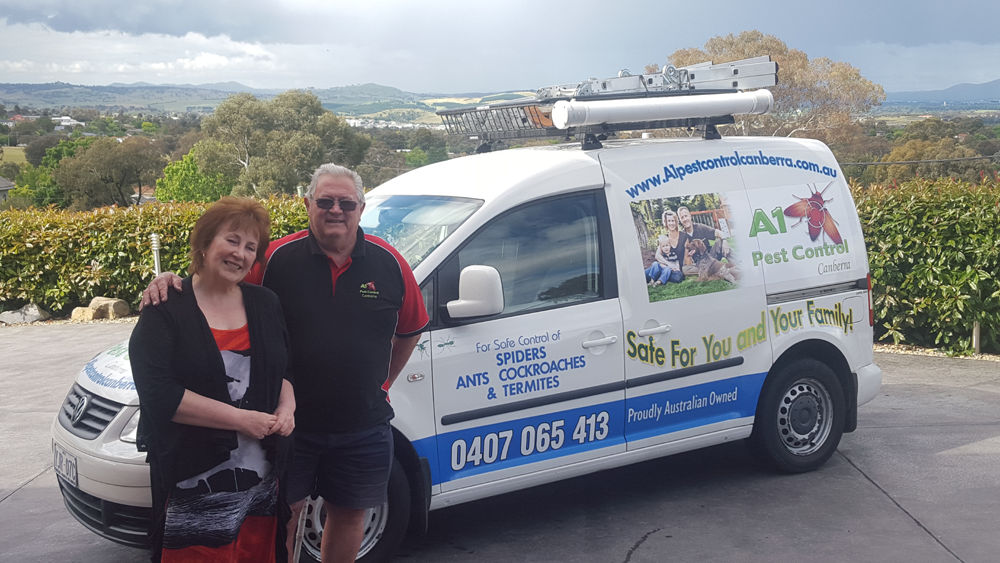
Husband and wife team Jenny Jordan and Bob Waters, who have run A1 Pest Control Canberra for the past five years, understand what it’s like. They’ve seen every creepy crawly in the book, and their phones ring off the hook in the spring and summer months.
“At this time of year you’ll want to be on the lookout for mice, cockroaches and European wasps,” says Jenny. “European wasps are a growing concern in Canberra. They build their nests underground or in trees, at the entrances to houses and even inside walls. And when they sting you, they don’t die. They go back and tell the nest they’re under attack and then come after you. They’ve evolved, so traditional methods of hitting them with boiling water or a can of bug spray doesn’t really help. Off-the-shelf just isn’t strong enough. Stay right away and call a licensed pest control specialist.”
Another pest to be wary of this season is bed bugs. Jenny warns that when you head out on holidays or stay in a hotel, bed bugs can ride on your luggage all the way home and then infest your house.
“Once they’re inside your house,” she says, “they’re really hard to get rid of. They hide in the cracks of walls, in the ceiling, on curtains and in your mattress. They anaesthetise the area where they will bite, so you don’t feel them biting you. The only way you might know they are there is the tell-tale spots of blood on the sheets or raised bites on your body. Eradicating them requires more than treating one room – they just move to another room. You have to treat the whole house.”
Bed bugs and European wasps are just two types of creepy crawlies that Jenny and Bob have been treating for years.
They started A1 Pest Control Canberra together after Bob, an ex-security guard, had a terrible motorbike accident in 2009. He came into contact with a car and spent six months in hospital recovering. Once back at home, unable to return to his security job and sick of watching Days of Our Lives, Bob took stock of his life and decided to embark on a new challenge.
Jenny’s brother, a successful pest control expert for over 35 years, suggested that Jenny and Bob could do very well with a pest control business in Canberra. He was right, and after beginning the accreditation process and registering A1 Pest Control Canberra, Jenny (who has a marketing background) was already fielding new client calls.
“I attribute much of our fast-tracked success to the insights we were able to glean from my brother. He had amazing tips and tricks to share that essentially helped us become fantastic pest controllers in a very short amount of time.”
Bob is now fully accredited, licensed and insured, and has come to love the pest control business. “There is never a dull moment,” he says. “Every property is different, and clients are often astounded by what I find lurking in the walls, under the house and in the roof cavities. It’s always very diverse, and I love helping people feel comfortable and safe in their own homes. I guess that stems from my background in security.”
Their clients include a long list of happy (pest free) home owners, new home buyers, renters, property investors, builders, real estate agents, schools and government agencies.
Jenny and Bob pride themselves on using family, pet and environmentally friendly chemicals, and have recently introduced thermal imaging technology to help with their initial pest investigations.
“Thermal imaging is amazing,” says Jenny. “It basically allows us to see through the whole house with the click of a button. Traditionally you would walk through the house and look for signs of infestation, tap walls and rely on your senses and experience. Now we have science to confirm everything.
Thermal imaging allows us to detect the body heat, movement and moisture of pests like termites anywhere in the house. And while we’re at it we often pick up issues with plumbing or maintenance and alert the owner. It’s very efficient.”
The company is now fully accredited for thermal imaging, and is also an approved Termidor treatment provider.
If you’re keen to have someone look behind the walls and in the ceiling of your home, or you need termite inspections, termite barriers, or European wasps, mice, cockroaches, ants, bed bugs or any other creepy crawly taken care of, call A1 Pest Control Canberra.
If you want to learn exactly how you can leverage the internet to create a lifestyle by design join us live by registering above or below just click "GET STARTED NOW"